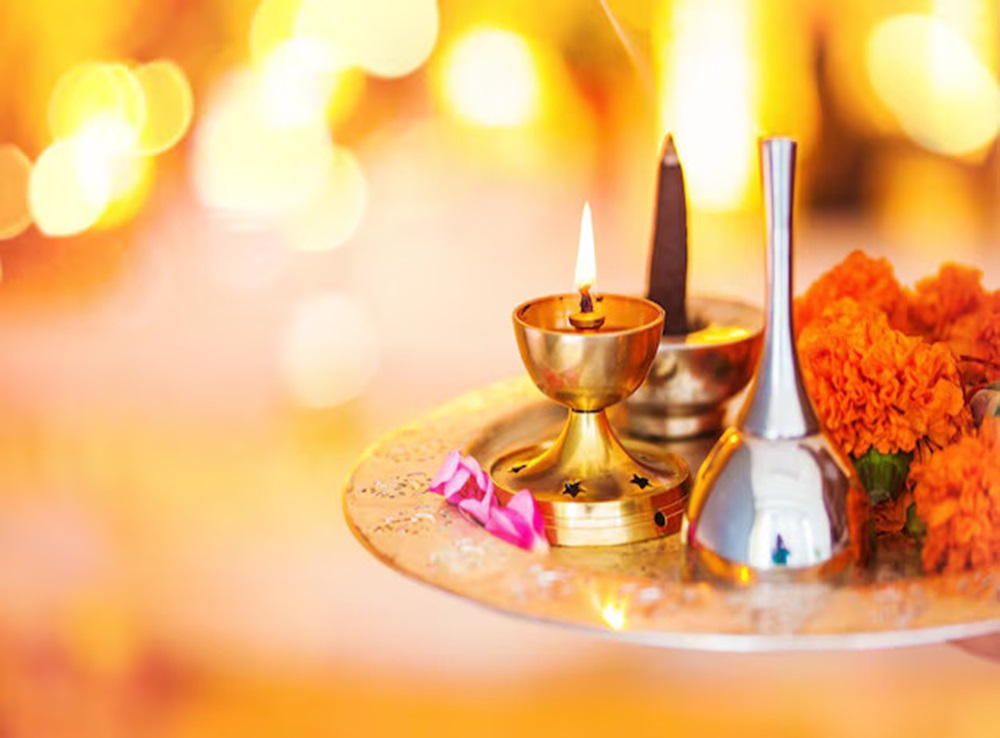
Puja, as a sacred Hindu ritual, embodies devotion, love, and a spiritual connection to the divine. It can be both a deeply personal act performed at home or a communal event in temples. Here's a structured overview of its significance and process:
Puja is performed for several reasons, including: Celebrating Events: Marking festivals, birthdays, or special occasions. Invoking Blessings: Seeking prosperity, health, or solutions to challenges. Expressing Gratitude: Thanking the divine for blessings received. Strengthening Spiritual Connection: Deepening faith and devotion.
1. Simple Daily Rituals:
Lighting a lamp (diya) and incense.
Chanting prayers and mantras.
Offering simple items like flowers, fruits, and sweets.
Performing Aarti, a circular movement of a lit lamp in front of the deity.
2. Elaborate Temple Ceremonies:
- Conducted by priests with detailed rituals and recitations.
- May involve offerings of intricate decorations, sacred fire rituals, and communal singing.
Steps of a Puja
1. Preparation:
Cleaning the altar or puja space.
Arranging items like sandalwood paste, kumkum, flowers, fruits, incense, and lamps.
2. Invocation:
Invoking the deity through prayers and chanting.
Placing the deity’s image or idol in the center of the altar.
3. Offerings:
Sandalwood paste and kumkum: Marking the deity as a gesture of respect.
Flowers: Symbolizing purity and devotion.
Incense: Signifying spiritual upliftment.
Lamp: Representing enlightenment and the removal of darkness.
Food (Prasad): Sharing prepared sweets, fruits, or dishes as divine blessings.
4.Aarti:
Rotating a lit lamp in front of the deity accompanied by devotional songs.
Participants may circle their hands over the flame and touch their foreheads, symbolizing receiving divine blessings.
Puja is a heartfelt expression of devotion that aligns the devotee with the divine. Whether done briefly each day or as part of a grand celebration, its essence lies in offering love, respect, and gratitude to God.